More and more people are planning their summer holidays around getting away from the heat. If you are one of them, you have probably not thought much about what a cool summer actually feels like — most people have not, until they are standing in one.
So this is our attempt to describe it honestly, from the farm, well ahead of when you would need to book.
What’s actually happening, and what isn’t
The word going round is “coolcation” — planning a summer holiday around a comfortable climate rather than a hot one. It has moved from a novelty phrase to something the booking data actually shows.
Research by Mabrian and Data Appeal found rising demand for northern regions like southern Finland and Vestland in Norway, and even for the northern parts of southern countries — Galicia, Trentino-Alto Adige, Normandy, Alsace. On the French version of Hotels.com, searches for Copenhagen jumped 246% after the first heatwave hit France in May, and Dublin rose 151%. Trivago data showed UK bookings for July and August up 55% for Norway, 57% for Sweden and 29% for Denmark.
The heat driving it is not in dispute either. Western Europe recorded its warmest June–July period on record in 2026. Barcelona’s Fabra Observatory, which has more than a century of data, hit 40.5°C on 8 July. Copernicus has confirmed that dry soils in June amplified the July heat in a feedback loop, and Europe is the fastest-warming continent on Earth, warming at roughly 0.56°C per decade.
So the demand shift is real and it is measurable. We want to be careful about the next step, though, because there is a claim floating around that we are not going to make.
The El Niño claim we are not going to make
You will see 2027 travel content saying that a strong El Niño means a mild or pleasant Icelandic summer. Please be sceptical of that, including if we were the ones saying it.
El Niño itself is real and it is large this cycle. NOAA has put the odds of a very strong event during the northern hemisphere winter of 2026–27 above 90%.
But Iceland’s weather is not governed by the Pacific. It is governed by the North Atlantic Oscillation and by the Gulf Stream, which is the reason a country at 63 to 66°N has a cool maritime climate rather than an Arctic one. The scientific link between El Niño and North Atlantic weather does exist, but researchers describe it as relatively weak, carrying a high degree of uncertainty, season-dependent, and not stable across decades. There is even a body of work showing a lagged response a full year later that runs opposite in sign to the immediate one.
Translated: nobody can tell you today what Icelandic weather will do in July 2027, and anyone who does is guessing with confidence they have not earned.
What we can tell you is what an Icelandic summer reliably is, because that part barely changes.
What summer here actually feels like
The temperature
July is the warmest month, and the national average sits around 10 to 11°C. Typical daytime highs land somewhere between 10 and 15°C. On a still, sunny day it can push toward 20°C and occasionally higher, and you will see Icelanders in t-shirts looking delighted about it.
For context, London averages around 23°C in July.
That number sounds cold written down. In practice, out of the wind and in the sun, it is the temperature at which you can walk uphill for four hours and enjoy it. Which is rather the point.
The light
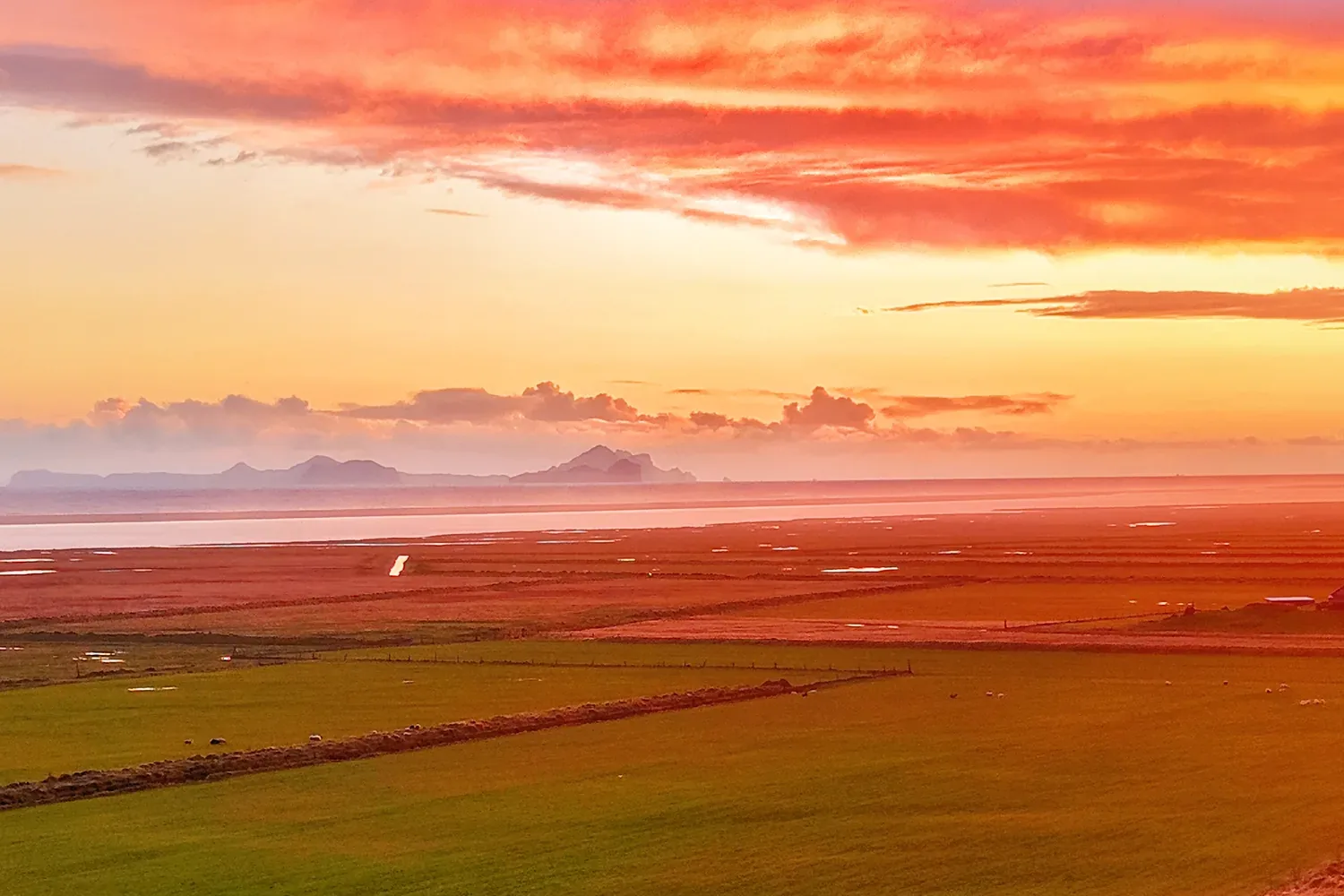
This is the part people underestimate. Around the solstice there is essentially no proper darkness. In midsummer you can stand at the base of Skógafoss at eleven at night and see everything. By mid-August the sun is setting around ten and back up before five.
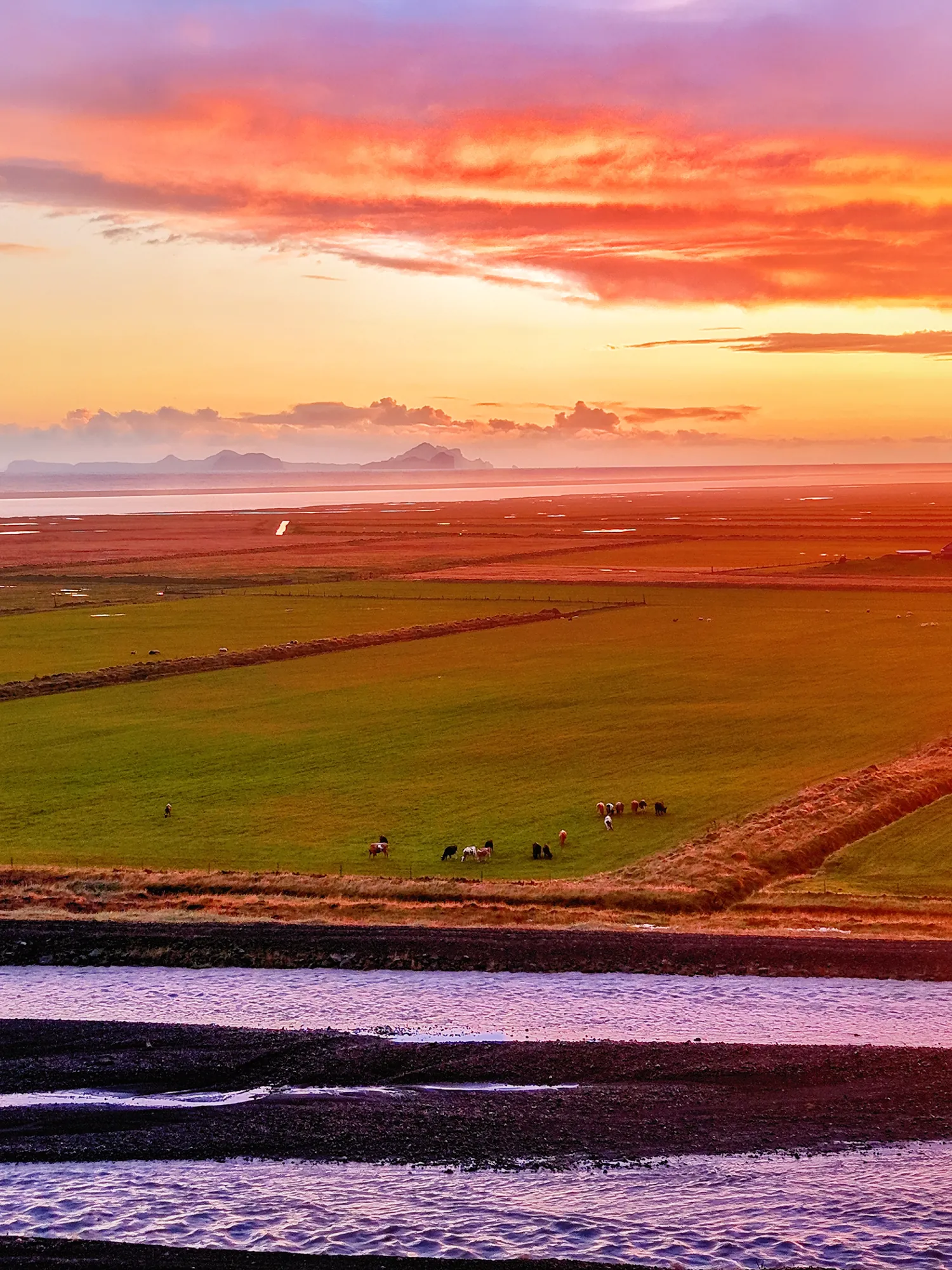
It changes how a holiday works. There is no rush to get anywhere before dark, so the schedule stops being a schedule. Some people love it and some people need an eye mask. Bring one either way.
What to pack
Layers, and waterproofs you actually trust. The south coast is milder than the north but wetter and windier, and the wind is what you will feel rather than the temperature. A t-shirt morning genuinely can become a thermal-layer afternoon.
Do not pack for 11°C. Pack for 11°C with horizontal rain, and then hope you do not need it.
The part the trend pieces leave out
Here is where we will contradict the coolcation articles slightly, in your favour.
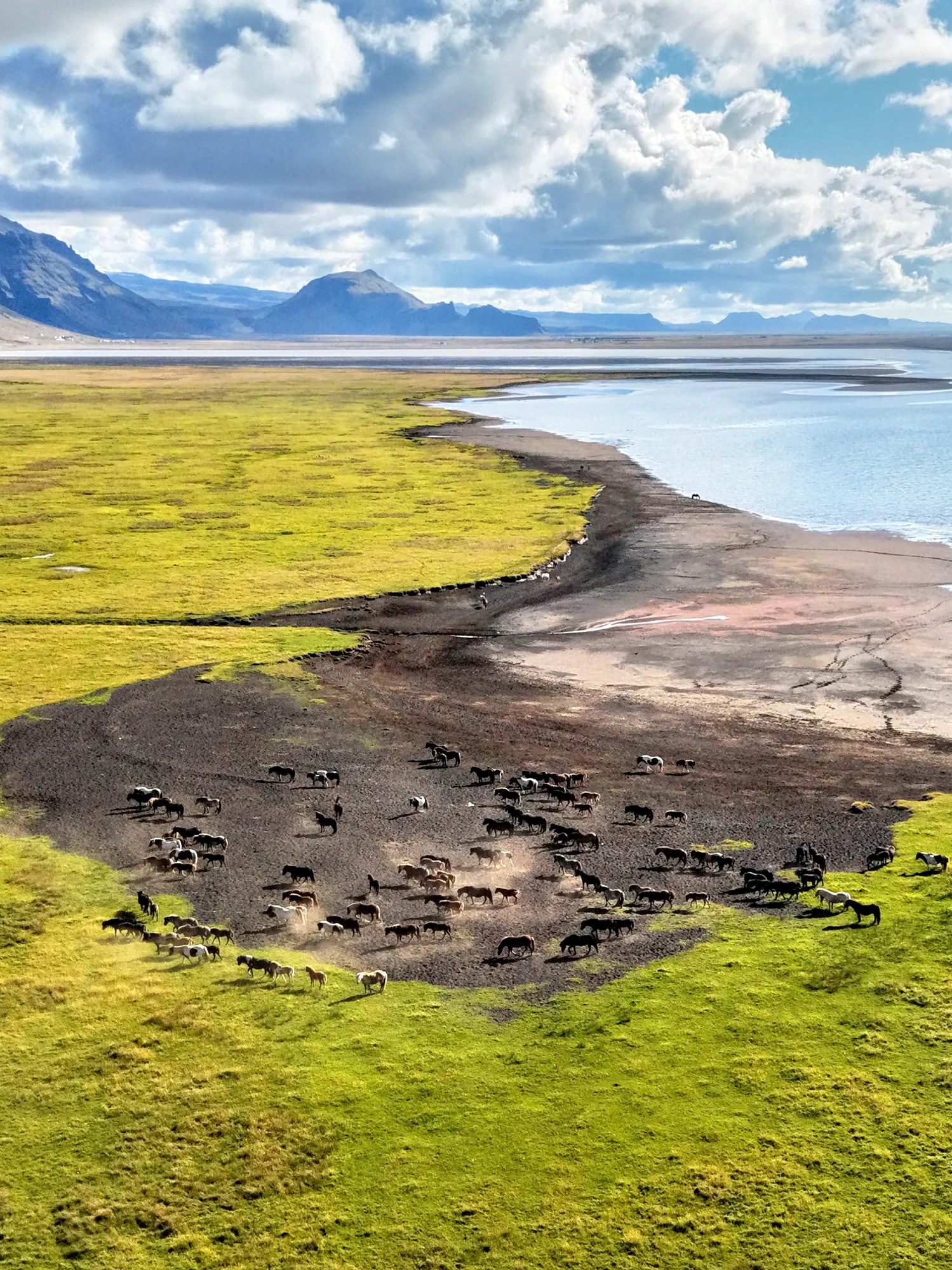
Reading them, you would assume Iceland is being overwhelmed. It is not. Iceland has been on a plateau of roughly 2.3 million foreign visitors a year for three years running, and the first half of 2026 actually ran about 1% below the same period in 2025, at around 956,000 departures through Keflavík.
Forbes has also been openly cautious about how quickly the trend converts into bookings, pointing out that price is a real factor and much of southern Europe is simply cheaper.
We would rather you heard that from us than felt misled later. The honest position is: the demand shift north is genuine, Iceland’s total numbers are flat, and what that means for a traveller is that you get the cool summer without the crowd surge the headlines imply — as long as you get slightly off the busiest stretch of the ring road, which is where we happen to be.
What you can do from here in summer
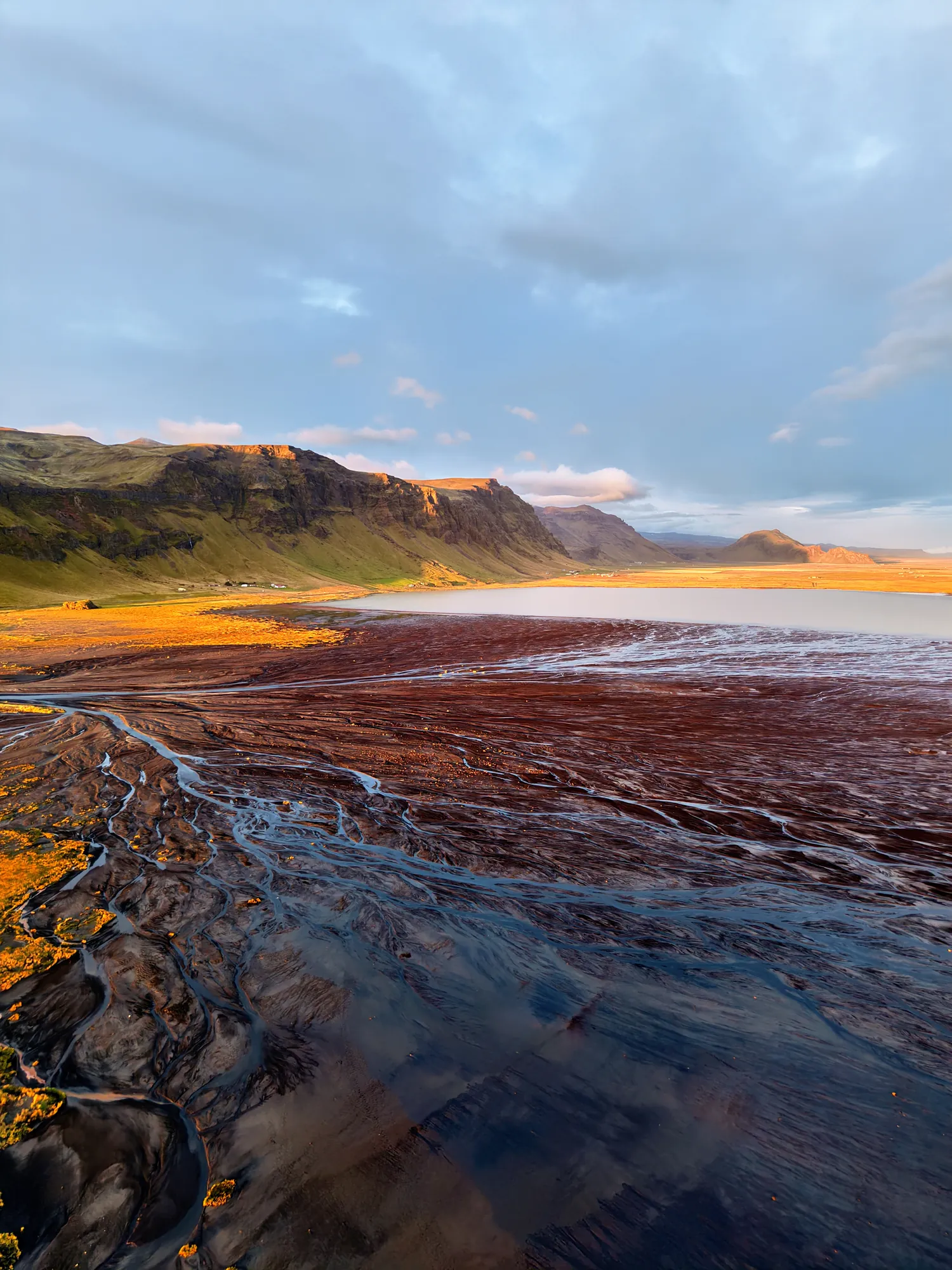
We are on Ormskot, a working sheep and horse farm at the foot of Eyjafjallajökull in the Eyjafjöll area. Seljalandsfoss and Skógafoss are both about ten minutes away.
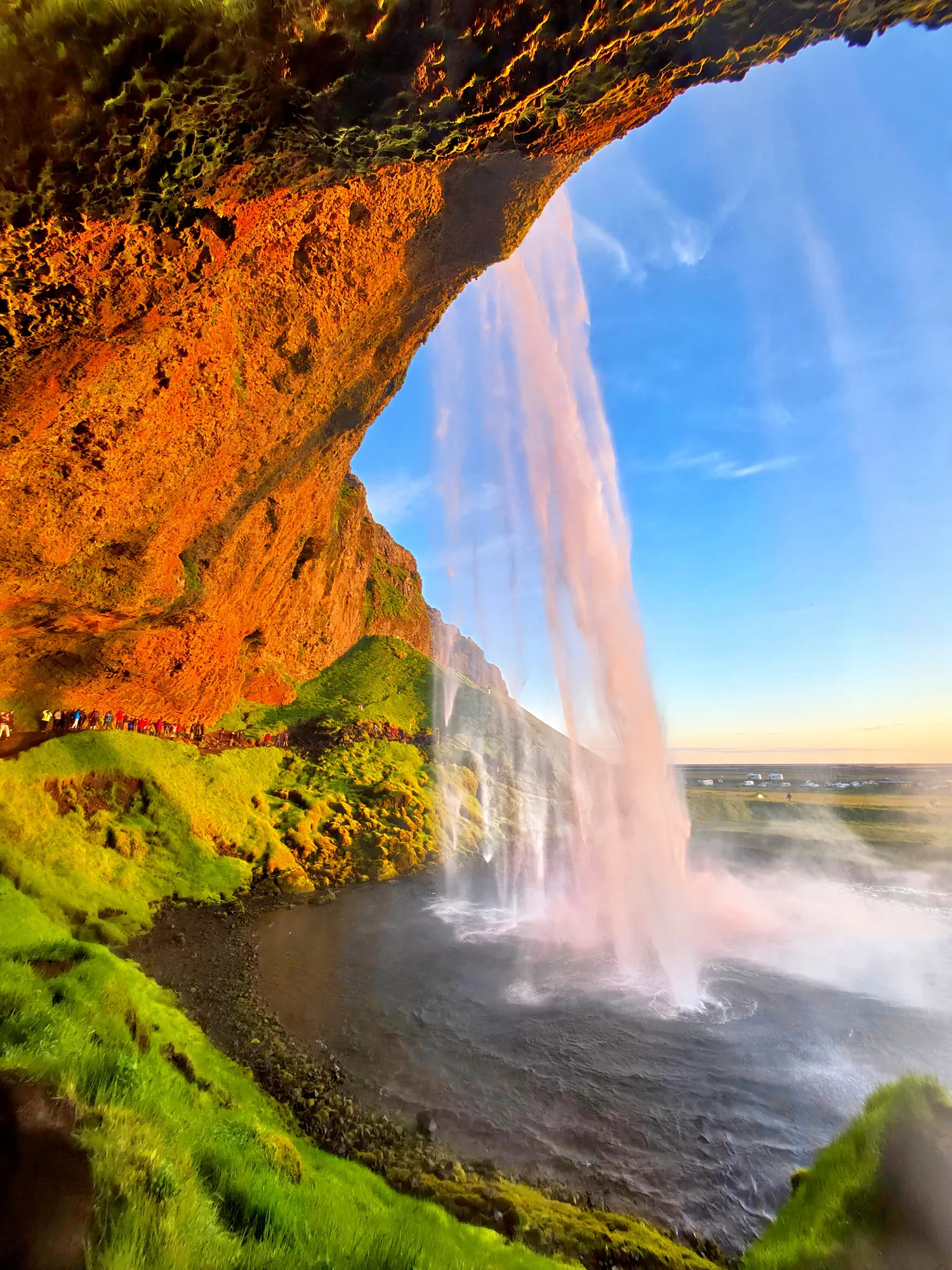
Summer opens up things the winter simply does not offer:
- The waterfalls without the ice. You can walk the path behind Seljalandsfoss in summer, which is not sensible in February.
- The highlands. The F-roads into Landmannalaugar and Þórsmörk open for a short window each summer, usually somewhere between mid-June and early July, and close again in September. That is a full day out from here and it needs a proper 4×4, but it is the reason many people come in summer at all.
- Long evenings outside. The hot tub at eleven at night in broad daylight is a strange and very good experience.
- Hiking without a headtorch or a deadline. Kvernufoss, tucked in a gorge just east of Skógafoss, is a short walk most people drive straight past.
There is more on the region in our travel guide.
Being fair about the downsides
Three things we would want to know if we were you.
It rains. The south coast gets more of it than most of the country. Some trips get four grey days out of seven. There is no way to plan around this and anyone promising otherwise is inventing.
Iceland is not cheap. This is the real counterweight to the whole coolcation argument and it deserves stating plainly rather than buried at the bottom.
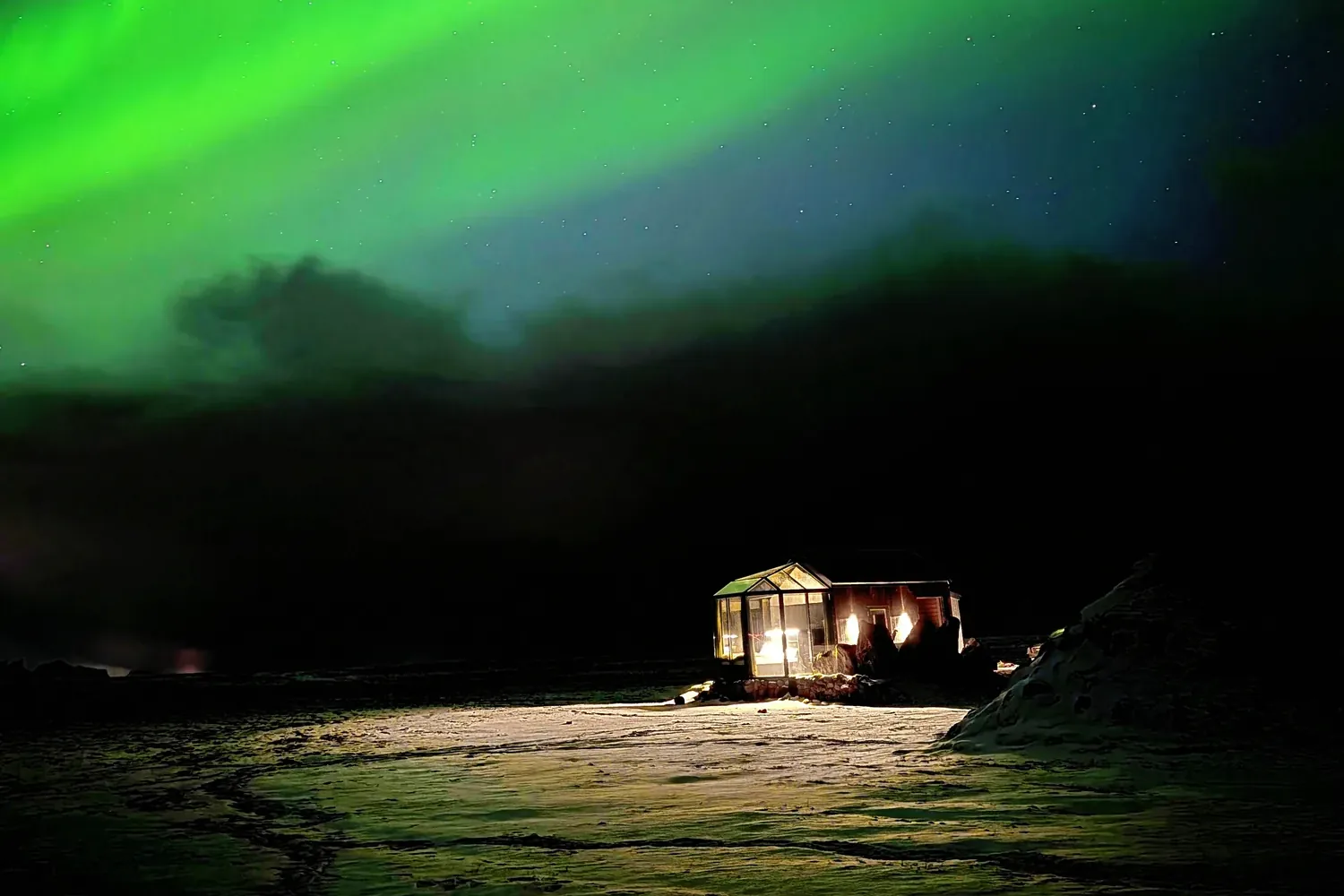
No northern lights. You cannot see the aurora in an Icelandic summer, because there is no darkness to see it in. If that is the trip you want, come between late August and mid-April instead, and read our northern lights guide.
Why we are writing this in autumn
Because summer travellers plan a long way out. Winter visitors tend to decide within weeks; summer visitors book months ahead. If you are reading this in autumn 2026 thinking about next July, you are not early. You are roughly on time.
We have four cabins. Aurora Glass Cabin I and II have glass roofs and sleep two, each with a private sauna. Aurora Cabin and Seljalandsfoss Cabin each sleep up to four, and Seljalandsfoss Cabin is our family one. Every cabin has its own private outdoor hot tub — private, not shared with anyone. There is a kitchen, free WiFi, private parking and self check-in from 16:00. No pets, non-smoking.
You can see all four on our cabins page, and dates are here.
The short version
Southern Europe is getting hotter faster than almost anywhere on the planet, and people have started voting with their bookings. Iceland is one of the places they are voting for.
We are not going to dress that up as a forecast, and we are not going to pretend our own weather is predictable, because it is not. What we will say is that a summer here runs around 11°C, stays light nearly all night, and has more space in it than the trend articles would lead you to expect.
Bring a coat. You will be glad of the coat.
Sources
- Euronews, on the coolcation trend and the Mabrian / Data Appeal research — euronews.com
- Trivago booking data for Nordic destinations, via EuroLuminant — euroluminant.com
- Forbes, on why the shift may be slower than headlines suggest — forbes.com
- Copernicus Climate Change Service, monthly climate bulletins — climate.copernicus.eu
- Copernicus, on the May 2026 European heatwave and Europe’s warming rate — climate.copernicus.eu
- WMO / UNRIC, on the 2026 European heat and Barcelona’s record — unric.org
- NOAA Climate Prediction Center, ENSO Diagnostic Discussion — cpc.ncep.noaa.gov
- Nature (npj Climate and Atmospheric Science), on the weak and uncertain ENSO–NAO teleconnection — nature.com
- Journal of Climate, on ENSO teleconnection to the North Atlantic–European sector — journals.ametsoc.org
- Science, on the one-year lagged ENSO effect on the NAO — science.org
- Ferðamálastofa (Icelandic Tourist Board), foreign visitor numbers — ferdamalastofa.is
- Arctic Adventures, Iceland travel trends 2026, using Ferðamálastofa and Isavia data — adventures.is
- Icelandic Meteorological Office, annual weather summary — en.vedur.is